Literature · William Falkner

Joella – the real voice of Falkner

It is highly plausible. I’d even venture to say, it carries more weight than anything I’ve seen the critics produce. The theory is undeniably more grounded. 

Some have spent their academic lives studying that of William Faulkner. Scholars have written and reviewed various points. Light has been shed on literary roads less traveled such as Faulkner’s oral mode and narrative voice, his works during the Great Depression, m and we must not forget the 545 pages on Gay Faulkner.

Well, I don’t have all the answers because there’s one burning question I still have What was his great epiphany? After all, that’s what Faulkner claimed occurred just before putting a pen to “Sound and Fury”. He said, “The words just came to me.”

My name is Amanda, and I might just be able to answer some of those questions.

Historical conservation and restoration is my profession. The vast majority of projects are in cemeteries.  

I’m no literary critic yet hold the utmost respect for such scholars. The truth is, reading just one of these dissertations left me with a headache and 85% completely rising above and over my head. 

I’ve always joked and said that I work under the watchful eye of Faulkner.

Having spent countless hours in the New Albany, Mississippi city cemetery, I can attest to the smell of liquor and the peer of Faulkner’s beady eyes on a summer evening. He is a relentless soul hovering over all below as his more than life-size decal taking up a good deal of real estate on the near million-gallon water tank.

Quite the gamble for the city’s tourism committee, considering Faulkner’s appeal in his hometown is lack of luster.

Not long after the decal went up on the water tower, the Mississippi Department of Transportation dedicated a 16-mile stretch of road to William Faulkner.

That same road currently has more potholes than Faulkner ever thought about placing a punctuation. However, if you follow it long enough, it will take you right to Saint Peter’s cemetery.

Nestled in the heart of Oxford, Mississippi is one of the most beautiful cemeteries in the country. I’ve had the privilege to be a part of several restoration projects at St Peter’s Cemetery.

I found it interesting that so many college kids would gather around Faulkner’s gravesite making toasts and taking shots of liquor with the late author.

My recent discovery came much like Faulkner’s epiphany prior to writing his first successful novel, it just came to me.

The setting was Section 2 St Peter’s Cemetery. It was a recent overcast February day in North Mississippi. With the fact being, one simply can not drive across a cemetery, I parked and made several trips to and from the project I was working on that day.

Never having been skiddish, scared, or afraid while doing my job, the occupants and I have a agreement. They let me work and I let them rest.

That is until this day. You see, it was blatantly obvious something odd was going on every single time I walked in front of a particular stone.

The first incident that occured in front of one particular stone, was a dropped glove. The second was a five gallon bucket of water spilt in its’ entirety. The third and final straw was my bag of dremmel bits dumped right out before me. All three happening within minutes of one another.

As I knelt picking the bits up out of the water soaked soil I looked directly in front of me. And there it was, staring at me. My skin felt crawly as I knelt eye-to-eye with the most evil tombstone I had ever seen.

Standing one might never notice. It was in the shape of a cross. “In the arms of Jesus” was engraved across the top. Then it took a hard left turn. Midway of the cross was the All Seeing Eye. The Eye of Providence staring at me like I was the one with the problem.

It wasn’t just any eye. It was the “All seeing eye” resting on a compass, and to that Freemason it was meant to send a message.

The All-Seeing Eye, so the Freemasons call it, is obsolete in cemeteries after the 1900’s. The engraving of one on an individual’s stone was few and far between prior to that time. The reason, oh there was a reason alright.

To the Freemason that emblem on a stone meant, I may be gone but God Sees All and you will pay for your misdeeds.   It almost felt a bit Benjy-ish,  but at the time I didn’t know what to call it. 

Needless to say, I gathered my drill bits and found another route to my project. Not to dare tread by the eye again.

By days end I was more curious than spooked. Who was this guy? Did he have descendants? Were they decent people? Had the blood line stopped with this gentleman?

I walked backed over to the evil eye to look at the name on the stone. I hadn’t made it past the eye earlier to see whose honor it had been erected.

The last name was Sheegog. A name I had never heard of. We certainly had no Sheegog’s in New Albany or Oxford.

My mind immediately went to Judy Sheehog. She was the only thing close to  Sheegog I knew. She played the role of Faulkner’s fictional character when he told childrens’ ghost stories at Rowan Oak. Faulkner never wrote of Judith Sheehog.

However, his niece, Dean,  was kind enough to document her in a book of the stories called “The Ghost Of Rowan Oak”.

Judith was a fictional character who apparently flung herself out a window at Rowan Oak over a man and it led to her demise.  ( Straight out of Compton) 

I quickly got on my phone and looked up the name James Gowan Sheegog. I found him on a cemetery locating site but there nothing else.

That site told me his mother and father were buried next to him. I quickly put in the name Robert Sheegog

Hmmm, would you look at that. Robert Sheegog  was the wealthy plantation owner who built and first lived in what is now known as Rowan Oak! 

There was very little on Robert Sheegog to be found. If he was liked well enough in Oxford to have an obituary, it could not be found. However, a clipping was found of the one written in the town from which he transplanted. They seemed to brag on his wealth.

Robert Sheegog, an Irish immigrant was he. Irish immigrants were more often than not considered dirty and diseased in the early 1800’s. Now this may or may not have been the case for Sheegog. I do know he married “up” in South Carolina and his in-laws gave him the land in Mississippi to develop. So in turn he built the plantation home now known as, are you ready, Rowan Oak! 

At Sheegog’s death in 1861 at the age of 59, he had many slaves and nearly 10,000 acres of land in Lafayette and surrounding counties.

It is said, he came home one day from being out at one of his plantations in a neighboring county and fell strangly ill.

It appears, but is not evident, that Robert Sheegog wasn’t much for church either. At this point I was definitely picking up a Thomas Sutpen vibe.

Some sources say Mr. Sheehog had 10 children, others say 5. I can account for a 28 year old son (William) and a 16 year old daughter (Anna Mariah) that both died within the same week. Sources say they both died of pneumonia. I say pneumonia in August might be a stretch. Yellow Fever had yet to reach North Mississippi. 

A daughter that lived to reach 60 and is buried in Nashville. Records indicate no children.

James Gowan, the one-eyed Freemason died at in 1869 at the age of 33.

It was beginning to look like I was right about this dynasty fading out. To twisted for mortals. 

They did have one son that died at the age of 54 and by all accounts moved to South Mississippi to possibly start a family of his own. Don’t quote me on that. The records for that era in Mississippi are simply pitiful.

However,  is with good reason no one has ever tied Faulkner’s work to the Sheegog’s ’. You see, on the face of it the Sheegog family had all died or left town prior to Faulkner ever being born. All of them except Joella . She never went far.

I am convinced Joelle (widow to the one-eyed Sheegog still sealing vengeance) is the real story teller in Faulkner’s 1929-1939 works. She could very well be the individual responsible for Faulkner’s oral mode and narrative voice we hear on the sound and fury and Absalom absolom

Joella  was very much alive the first 31 years of Faulkner’s life. I simply can’t help but see him absorbing all she could tell him about the twist and turns of the Sheegog family.  Between the purchase of Rowan Oak and William’s stent as postmaster,  I feel certain there were more than acquaintances, in the literary sense. 

Now, again that is all assumption, but the fact is much like Rosa left the Hundred, Joella  left Rowan Oak. Joella went to the neighboring town of Winona, Mississippi and both ladies would be in a state of a coma before eventually giving way to death.

The parallel between the Sheegog’s  and Faulkner’s  greatest accomplishment are evident and found page after page.

Accompany those strange similarities with things like Faulkner constantly striving not to be traced by paper to his descendants. After all, he did change the spelling of his last name while Joelle was alive. 

Faulkner made an odd request after Joella’s death.  Be  asked that his burial plot be re-located to a separate cemetery than his mother and father. The claim was Falkner demanded for a black maid to be buried in Falkner family plot. When the family refused, he said he wouldn’t be buried there either.

The fact that Falkner lived an entire life never advocated for individuals of color tells me that a beloved maid wasn’t the cause for his final resting request. But rather a  risk run with sharing the same hill side as the Sheegog’s for eternity. 

You say changed the names in his story, but he neglected to change the setting. 

 It will be a century in 2028 since the last of the Sheegog family  is documented (in north Mississippi). But. 

Joella  passed away in 1928. The interesting thing about that is, how it coincides with Faulkner’s apparent, newfound freedom with writing that occurred in the late 1920’s. The one he said happened when he “shut the door to publishers” and the story narratives simply came to him. All of that coincidently happened to him the same year as Joella’s death.

Faulkner dove into to the “Sound and Fury” within six months of Joella’s  demise and had its final draft ready in October of 1929, just six months after first setting a pen to paper. 

Though Astonishing, is also fact that Faulkner did not marry until after the death of Joella Sheegog. Some say he was waiting on his high school sweetheart. I say that was a mighty big feat for a man to have struggled with infidelity right up til death.

It is strictly my opinion after a brief observation, that there is in fact a good reason Faulkner wrote all his life, yet only seemed to be productive for a span of 10-12 years. Had the Sheegog family not ended in demise so soon, perhaps he could have produced a fifth or sixth novel derived of such unique oral modes and narratives voices. But the fact is he lost them as soon as he ran out of notes. 

So I’m not certain that William Faulkner was gay as much as he was incredibly short and crushed by his one love. I am certain  the lack of masculinity derives from the fact, the words were  first derived  by a female narrator. 

My focus is that of history and not literature. I’m in no way trying to conspire anything regarding Mr Faulkner’s work. I am simply saying that I have been met face to face with Faulkner’s  “streamline of consciousness”. You too can find the narrator behind his stories, buried on top of a hill in the Oxford City Cemetery. She goes by Joella. 

I encourage anyone with an interest in Faulkner to tour Section Two of St 

Alzheimer’s · Older Parents · Thinking Logically

You Can’t Logically Be “Offended”

I get asked all the time,

“Out of all the specialties in healthcare, why do you choose dementia and geriatric patients?”

You can call them demented.

You can say they have Alzheimer’s.

Yes, they’re geriatric.

But to me?

They’re the only people left on the planet who do not get offended.

I mean—where else, other than a mortuary, can you go to work where no one has a fragile ego, no one clings to a victim mentality, and everyone accepts criticism like it’s a gold medal? Not one person lets the misfortune of a family member they’ve never met—because they’ve been dead for over a century—dictate where exactly on their sleeve they should wear their feelings.

Take blunt criticism.

Most people lose their minds over it.

In our facility, a former prominent coach sits directly across from a former Miss Alabama at the dinner table. One evening, he looks at her and says,

“I sure would love to love you, but I just can’t love anybody with more hair on their chin than I have.”

The rest of the world would call that brutal.

Miss Alabama? She just smiled brightly and said,

“I know Jesus is coming, and we are going too—”

No offense taken. No spiraling. Just vibes.

Then there’s perceived rudeness

Another big trigger for the easily offended. But not in geriatrics. Because after you’ve told the same gentleman five times to get back in bed, it’s now 2:30 a.m., and he looks at you and says,

“I ain’t getting back in bed, and I ain’t taking a whore like you with me,”

The only thing you perceive is that the recliner he’s been fighting to reach all night is probably the better option anyway.

Personal boundaries?

Oh, those get interesting.

When you have a hallway full of dementia patients, doors don’t always get locked. Sometimes a woman will crawl into bed with a man—not sexual at all. She just really had to pee and didn’t want to pee in her own bed.

Now, the gentleman could have been deeply offended.

Instead, he just wanted clean Fruit of the Looms, fresh sheets, and for her to go pee in someone else’s room.

And then there’s being offended by assumptions about beliefs.

Geriatric patients don’t remember what they believe.

Nonverbal cues? Eye rolls. Hand jerks. Head twitches.

Do you know what happens in a nursing home when someone does that?

We don’t get offended. We check to see if they’re a DNR—or if we need to start CPR and call an ambulance.

People getting offended on behalf of family members they never met—because those people have been dead for over a century—is honestly comical, logically speaking.

The truth is, geriatric patients don’t remember any of the family members they have actually met.

Alzheimer’s patients don’t spiral over tone, boundaries, or assumptions—because being offended is an emotional reaction, not a logical process. And when that part of the brain checks out, so does the drama.

In other words: it’s not logical to be offended.

Being offended is an emotion.

Alzheimer’s and dementia affect emotional regulation, self-awareness, social judgment, and memory—but here’s the part people forget:

My patients can still use logic.

Procedural and practical logic often remains intact.

They can still:

  • Follow routines
  • Solve familiar problems
  • Make basic cause-and-effect decisions
  • Use learned skills (“If I’m cold, I need a sweater”)


So the next time your feelings get hurt, your boundaries get crossed, someone criticizes you, or you read too much into a nonverbal cue—remember this:

Stop reacting with emotion.

Use your logic brain.

Because if you live long enough, you’re going to have to anyway—

you might as well start practicing now.

death · Murder · Parenthood

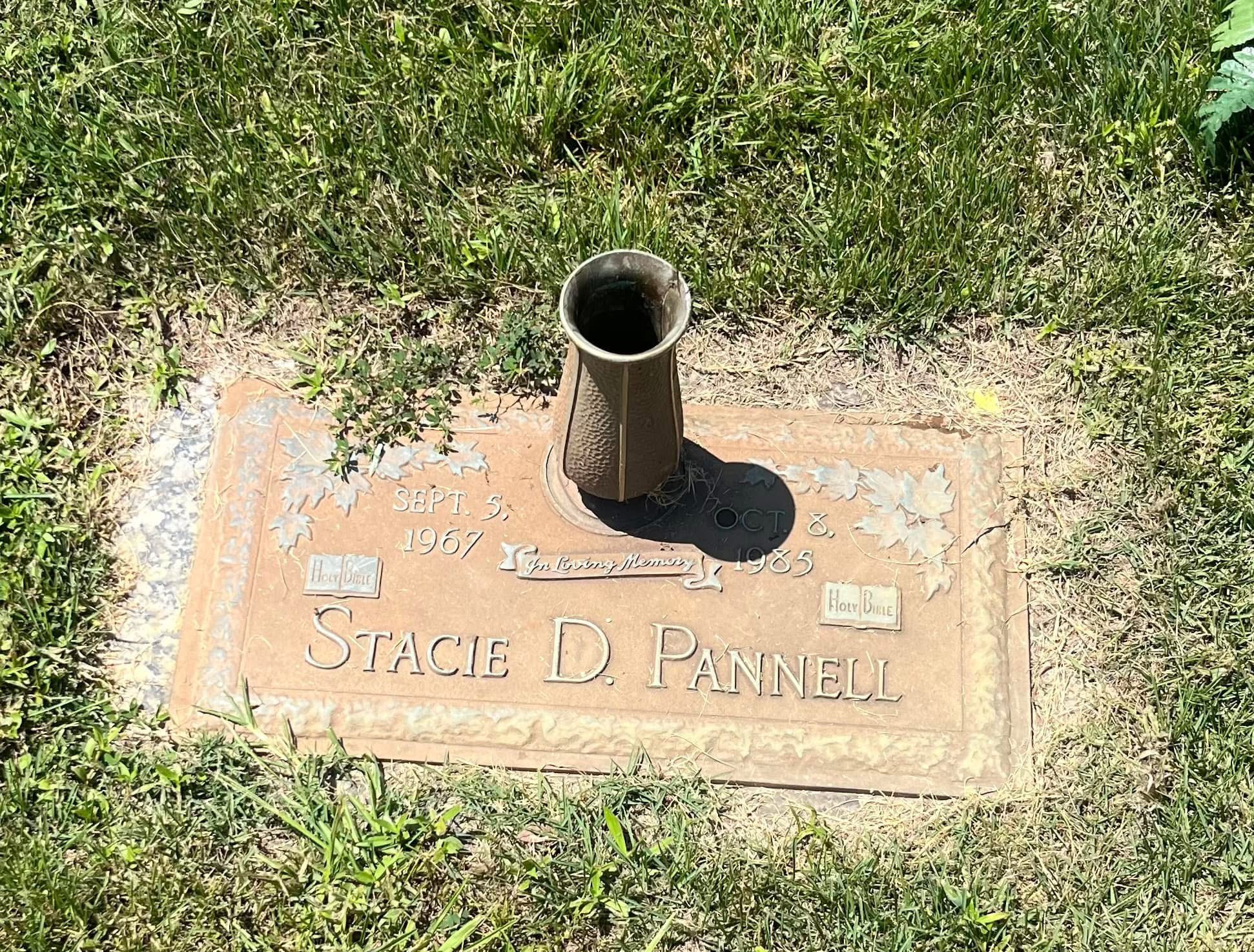
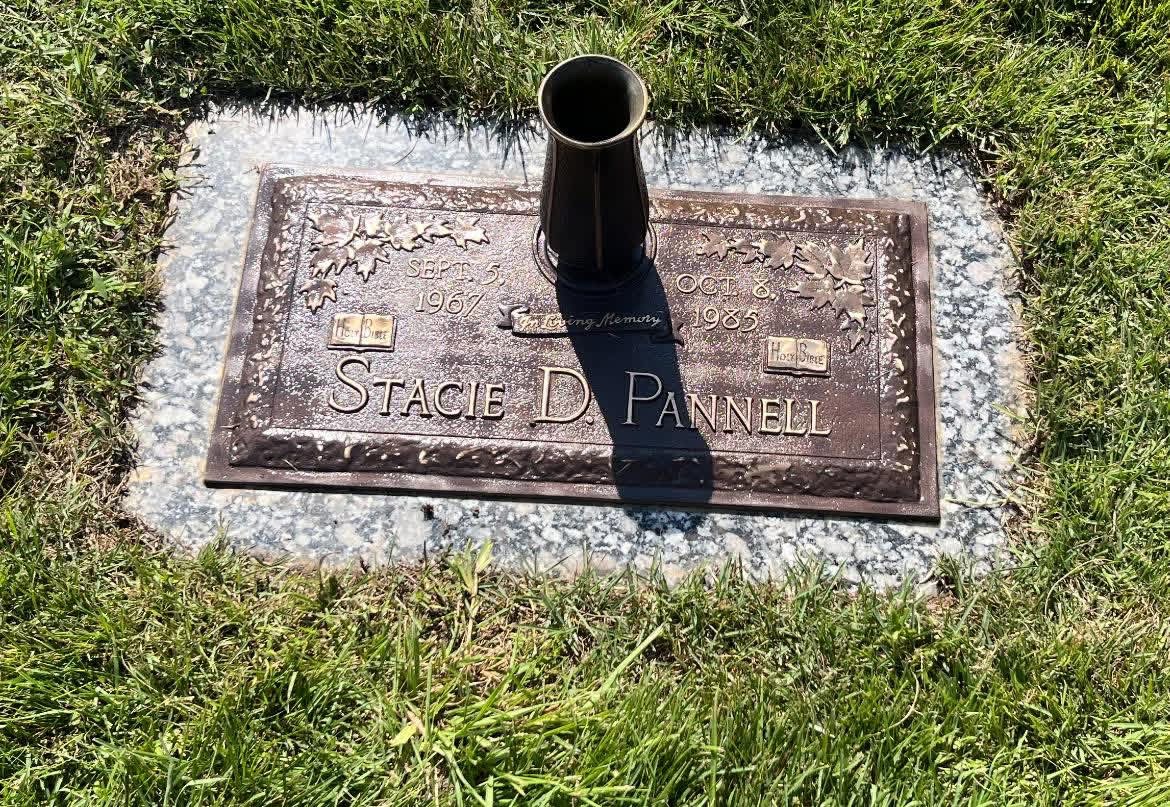
“I Don’t Want Anyone Forget My Stacie”

You see, it wasn’t until I met Mrs. Judy at a local cemetery to begin refinishing her and her husband’s bronze headstone that I realized I had just met one of the strongest, kindest, most loving women in the world. 

Her husband lost his battle with brain cancer in 1991. Mrs Judy boasted of his service in Vietnam and told me how she had a veteran plaque ordered. At any rate, the stone had been placed more than enough time for a bronze marker to be tattered and worn. Henceforth, I had been brought in to refinish it.

Mrs. Judy then pointed and asked me to do the same for the single stone situated just to the west side of theirs. The stone read, Stacie Pannell, and the death date was 1985. 

Before I thought (naturally), I spoke. “Oh, Mrs. Judy, your daughter, she was murdered.”. 

When I began my first-year student semester at Northeast, it had been 13 years since the insanely senseless murder of an incredibly beautiful and highly intelligent Tiger Band member in the Murphy Hall dormitory. However, the story of the tragedy was something every student who has ever been issued an ID at Community College knew well. 

No sick pediatric patient or dying geriatric patient has ever tugged at my heart like a grieving mother. The death of a child is something I can’t comprehend. Nor is it an empathy I can shake. Standing beside me was a precious soul who had lived with immense grief for what would be 40 years next year. 

As we stood over the stone, Mrs. Judy said, “Yes. Stacie was murdered. Stacie was beautiful. She had just started her freshman-year student year at Northeast. She was happy. She was so smart and loved the band.” 

Mrs. Judy stopped there, and with her head still low, she began to walk back to her car. Not one time did she mention Stephanie Alexander. 

After Mrs Judy’s taillights were out of site, I quickly pulled out my phone and looked at “Who killed Stacie Pannell?” I was looking for an inmate number. 

However, as I stood over the now tarnished overgrown marker, an overwhelming feeling of hurt and anguish came over me for Stacie’s family. 

Stephanie was found guilty of Stacie’s murder, and, thanks to a massive system failure for the Pannel family, Stephanie spent a mere nine years behind bars for what I consider the most brutal of crimes. 

Not only did Stephanie confess, she gave details of how many times she physically rared back and plowed the first thing she could find as a weapon into Stacie’s skull. Unfortunately, that something was the stock of Stacie’s drill team rifle. 

The very thing Stacie loved was the thing that used to end her life. 

Stacie had not a single defense wound on her body. As for the number of times she hit Stacie in the head, Stephanie recounted four, but she didn’t stop until she realized Stacie was no longer breathing. 

Seriously, could there be a worse criminal roaming free in society? Stephanie has now been out of jail twice as long as Stacie was alive. 

Stephanie (now Louden) boasts of being a loving mother to her son and wife to her husband. The happy family lives just down the road in Olive Branch, Mississippi.

At 59, Stephanie is a music lover, and, best I can tell, the number 69 is the number of donors she has accumulated money from on not one but two Go Fund Me pages she has created. Both within the last 5 years. 

Who knew such programs were open to convicted felons? Nor did I realize we, the citizens forever pay for the healthcare of convicted felons.

Funny, the Discovery Network mentioned none of that when they did a fantastic job producing the “On the Case with Paula Zahn” episode regarding Stacie Pannells’ murder. Granted, it aired prior to Stephanie’s plea to the online world for financial assistance.

However, Discovery, just like every other media outlet, did nothing but give Stephanie Alexander a voice. A platform. A chance to lie and speak of an appeal. So I will stop there for fear of giving her any incredibly undeserved scaffolding. 

I’m writing this because of Mrs. Judy. 

You see, I stopped her on the way back to her car that day. “Mrs. Judy,” I said. “Do you mind if I write about and post a picture of Stacie’s headstone on my website?” Her response echoed in my heart and brought tears to my eyes. It was the exact same one I’ve heard time after time from grieving mothers. “Please do. I don’t want anybody to forget my Stacie.”

If you are a reader who had the opportunity to know Stacie Pannell, attended Ripley High School, or attended Northeast Community College in the mid-80s, I’d greatly appreciate your comments highlighting the beauty of Stacie Pannell’s life. 

My intentions are to place it in PDF form and give it to Miss Judy. I would like for her to know Stacie has not been forgotten. By all means, share this post.

parenting

Little Blue Dinosaur

The Little Blue Dinosaur

St Louis was a good six hour drive from Myrtle. Gatlinburg, a good seven.

Both were further than my daddy cared to be from our little 80 acre patch in Myrtle, Mississippi.

I was about three years old when my daddy’s job took him out of town. Mama said he had gone to St Louis. I don’t recollect. But it soon became a trip none of us would forget.

The sun was just starting to show through the orange and brown plaid curtains of the motel room. Which meant nothing to my daddy since the street lights had beamed through them all night (we didn’t do street lights in Hargrove Holler). It was now his first day at this particular job site and had already been a long night.

Daddy got out of bed, got around, smoked a cigarette, had several cups of coffee, brushed his teeth, combed his hair, put on his clothes, grabbed his work coat, and reached for his empty lunch box. Mother wasn’t there to pack his lunch. So naturally the last thing daddy did right before walking out the door, was slip into his old work boots.

Daddy put his boots on. Sat back down on the bed and called mama. “Mary I am coming home”.

My mother has always had a high demand for explanations. She waited for his belated response. And as usual it drug out like molasses in January.

“I got up, got around, smoked a cigarette, had my coffee, brushed my teeth, combed my hair, put my clothes on, grabbed my coat, reached for my lunchbox but you weren’t here to pack it. Then, naturally right before I walked out the door, I went to put on my old work boots. There in the toe of my boot sat Mandi’s little blue dinosaur. I reckon she put it in there while you were packing my clothes. I reckon she thought I’d forget her. I reckon I’m not gonna let that happen anymore”.

Most of those lucky enough to know my daddy, know it wouldn’t have taken much to get him back home. Daddy shed a whole new light on the phrase “light traveler”. But according to him, Mandi Lee and that little blue dinosaur were certainly to blame.

Daddy was home before dark that day. He put the little blue dinosaur on top of his bedroom dresser, and forever, that’s where it stayed.

Nearly twenty years passed, and I had made the decision, bought the dress, and reserved a venue.

A venue for two none the less. Out of shame I wanted no friends or family in attendance. I was 19, terrified, and away from home for the first time (okay so at three months pregnant I had obviously been out of the house).

In a cabin, on some hill (with street lights) in Gatlinburg I woke up to prepare for my wedding.

I got up, got around, had my cup of coffee, smoked a cigarette, put on make up, hot rolled my hair, slipped into my wedding dress, and grabbed my Sunday coat off the hanger. It was March 13th and all of East Tennessee looked like a winter wonder land.

Thirty minutes before our ceremony and Scott was outside deicing the truck. I was inside putting on earrings, and getting his wedding ring out the box. Naturally the last thing I did before walking out the door was step into my shoes.

There in the toe of that ivory heel, sat that little blue dinosaur.

Daddy wasn’t telling me to come home. In his own special way (which was sweeter than any jar of molasses) he was telling me, no matter the circumstances I would always be that same little girl he found worth coming home for.

My Daddy was simply saying he was proud of me.

I sure do miss him

Uncategorized

My Fourth Grade Teacher

Fourth grade wasn’t easy for me. In fact, it was by far the hardest of all grades in school to me.

Lost as last year’s Easter egg was how I spent the majority of it. It wasn’t the curriculum that had me scratching my head. It was the teacher.

That woman never did like me.

As a child it seemed my attention span had some what of a quirky deficiency.

A good illustration would be the ride home from church one Sunday. It was filled with graphic details from my mother about the whooping that about to commence on my rear end. She claimed I was fidgeting, swinging my leg, chewing gum, playing with my hair, flipping loudly through the hymnal, writing various notes, drawing smiley faces, stars, and stick people, instead of listening to the sermon.

That is….until I was able to summon up the same scripture, three points and six sub points of the morning’s message.

By the time we got home, she was telling me to be quiet because she had already heard the sermon once, she didn’t need to hear it again.

Paying attention has never been the problem. Paying attention like normal folks has always been a struggle.

I was one of those annoying kids that have an excuse for everything and questioned everything else. I know this because I still find myself doing it as an adult.

I don’t know how old my fourth grade teacher was. I figure she had been set up with AARP for a while. Her hair was short with more gray than not. She had beady eyes that looked through bifocals. Lines surrounded her lips. She still had her real teeth and they were crooked on top.

She sat on a small frame and reminded me of Mr Rogers by the year-round cardigan sweater she wore.

At almost 40 years old, reflecting on my fourth grade year seems silly. But there had to be something that made it bad. Or made me bad.

I don’t recall any traumatic events in my life.

My brother was starting his first year at Mississippi State University and was no longer at home with us.

It wasn’t until the following year ‘91 both my maternal grandparents died as well as several of my extended family members.

I wasn’t influenced by peers. Probably because I was more of the ring leader.

I don’t remember ever being bullied. Or if I was, mama and daddy told me to get over it. So I did.

Actually fourth grade was the first time all my spend-the-night buddies and I were in the same class.

I even considered myself fortunate that year. I did not have to ride the bus to school in the mornings.

Afternoons weren’t so pleasant. I’d ride the bus to my grandmother’s house. I enjoyed it once I got there. A boiled hotdog always waited for me on a toasted bun with mayonnaise every afternoon.

I’d watch Andy Griffith and the local news til mama or daddy got home. As soon as I could pick their car out in the ball of dust the old gravel road kicked up, out the door I’d go. I’d run six acres over a beaten path in the sage grass to our house. Usually beating them to the door.

Daddy would work on things outside and mama would start supper.

Nothing was out of the ordinary in my life that year.

My parents had even gotten me a new puppy that year. It was a last ditch effort to get me to sleep by myself. It was a toy poodle and colored as white as a lily. We named him Satchmo Louis.

At first the dog went over like that of a rock in the Ladies Auxiliary punch bowl. I cried the first week I had him. I had done the math. Unless Jesus intervened, I would out live the new dog. I didn’t want another dog die.

It hadn’t been long since my previous dog, Charlie, had a run in with the mailman’s tire. I discovered him in the ditch while getting off the school bus. I remember running to tell Grandmother through face of tears.

I can still feel Granddaddy kiss me on the forehead as he walked out the front door. Across the front yard he went, with a hammer.

Needless to say, I skipped the hotdog that day.

I recollected a lot about that year. Best I can tell my teacher and me had clashing personalities. I was annoying and talked entirely too much for her liking.

I remember her asking “How much sugar does your mama put in her tea”?This teacher never let me lead team projects, be a line leader, or be a door holder. She never gave me encouragement, much less accolades.

She never paddled me. She pinched. She pinched hard and often.

I don’t remember pictures in her room or her speaking of any children. I assumed she was married.

Bless her heart, I don’t know if she battled health issues. I don’t know what personal things she dealt with.

I think academically she was as good of a grade school teacher as they come.

I don’t think she set out to dislike me. I think I just got on her ever living last nerve. And she wasn’t afraid to show it. Or call my mother to the school on more than one occasion to tell it.

Mama always assured me it was my fault. I was in the wrong and that I was going to have to do a lot better.

I did do better. May eventually came and things got a lot better.

She crossed my mind after seeing back to school pics my friends had posted online. One captioned “Praying my fourth grader has a great year”.

I wondered if my old Fourth Grade teacher was still alive. The thought crossed my mind to even visit her. Letting her see Remi Beau and asking if she needed anything.

Unfortunately I did not get the chance, God rest her soul.

If I could tell her anything. I would tell her that I appreciated her and had never forgotten her.

I’d tell her I was sorry, and best I could tell, it was the dogs fault I was such a terrible fourth grade student.